How to Care for a Leather Bag and Store It the Right Way
Reading time: 6 minutes
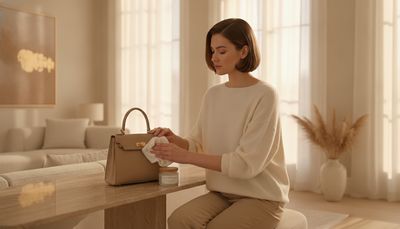
My first Chanel Classic Flap developed mold spots on the inside lining after just one summer in the closet. The closet stood against an exterior wall, the bag was zipped inside a plastic bag, and the trapped moisture had nowhere to go. That's when I learned: learning how to care for a leather bag doesn't start with conditioning cream, it starts with proper storage in your closet.
If you've invested several hundred or even a few thousand dollars in a designer bag, the last thing you want is to write it off after two years because of poor storage habits. In this article, I'll show you exactly how I've been storing my bags for years, which mistakes to avoid, and what really matters when it comes to dust bags, climate conditions, and shelving.
Why caring for a leather bag is about more than just conditioning cream
Most people think leather care is all about creams and waterproofing sprays. That's only half the story. Storage plays an equally important role in whether a bag still looks brand new after five years or ends up cracked and stained.
Leather is a natural material and reacts sensitively to humidity, heat, and direct light. Consumer protection experts generally recommend storing leather at moderate, stable temperatures and away from direct sunlight, since UV exposure bleaches the material and makes it brittle. That's exactly what happens in many closets positioned right under a roof or next to a radiator.
The role of humidity in proper leather storage
Air that's too dry causes leather to dry out and crack, while air that's too humid encourages mold growth. The ideal relative humidity sits between 40 and 60 percent, which also happens to be the general recommendation for indoor living spaces. A simple hygrometer, available for under $15, helps you keep an eye on the conditions inside your closet.
If your closet sits against an exterior wall, it's worth leaving a small gap of at least 1 to 2 inches between the wall and the closet. That way air can circulate and moisture doesn't build up.
Designer bag care: proper prep before storing
Before any bag goes into the closet for an extended period, I always clean it thoroughly first. Otherwise, dust and natural hand oils slowly work their way into the leather over the weeks and leave dark marks that are nearly impossible to remove later.
For smooth calfskin, a slightly damp microfiber cloth does the trick. For suede or nubuck, I use a dedicated brush. After that, I let the bag air dry completely, never on a radiator and never in direct sunlight.
Preserving shape before storage
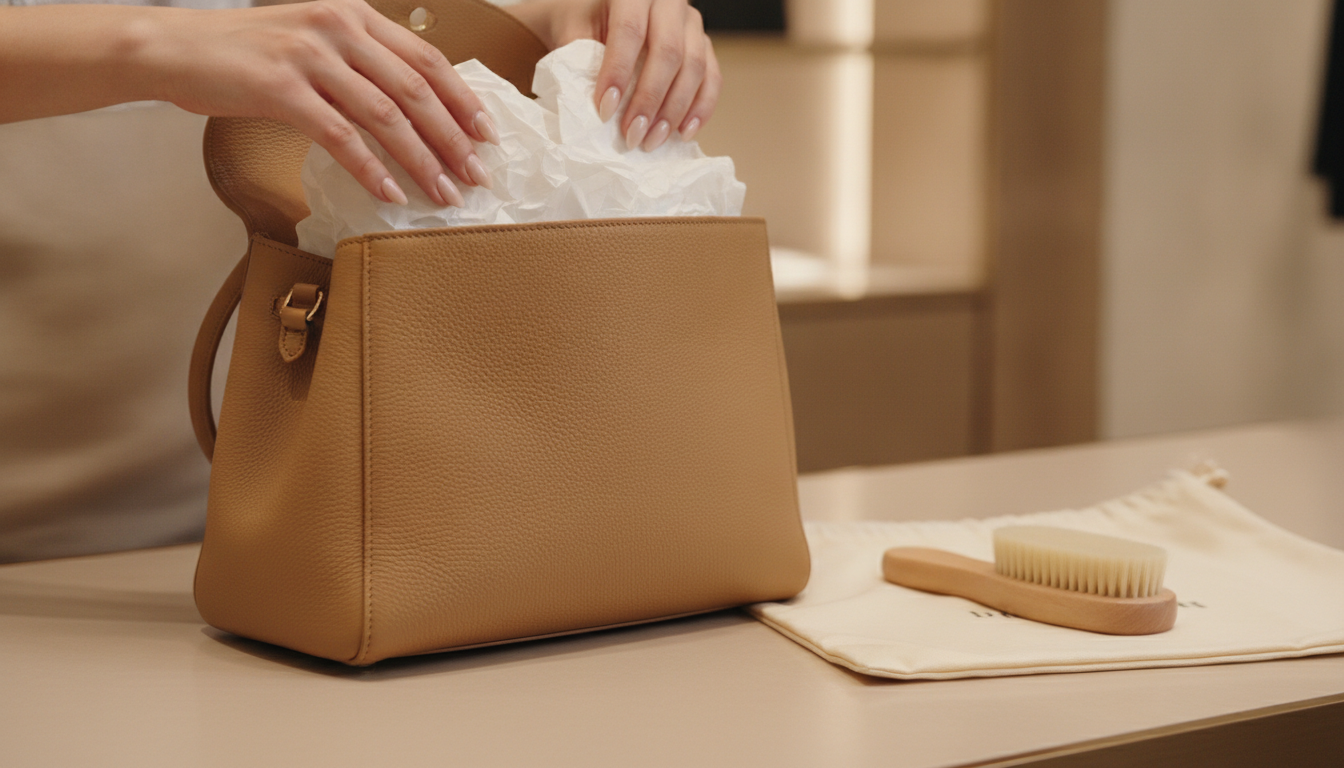
Keeping your handbag's shape intact only works if you stuff it before putting it away. I use old, acid-free tissue paper, loosely balled up and tucked into the handles, straps, and main compartment.
Avoid newspaper, as the ink can transfer onto light-colored leather. Bubble wrap isn't a great choice either, since it traps moisture instead of letting it escape.
Caring for and storing a leather bag: step by step in the closet
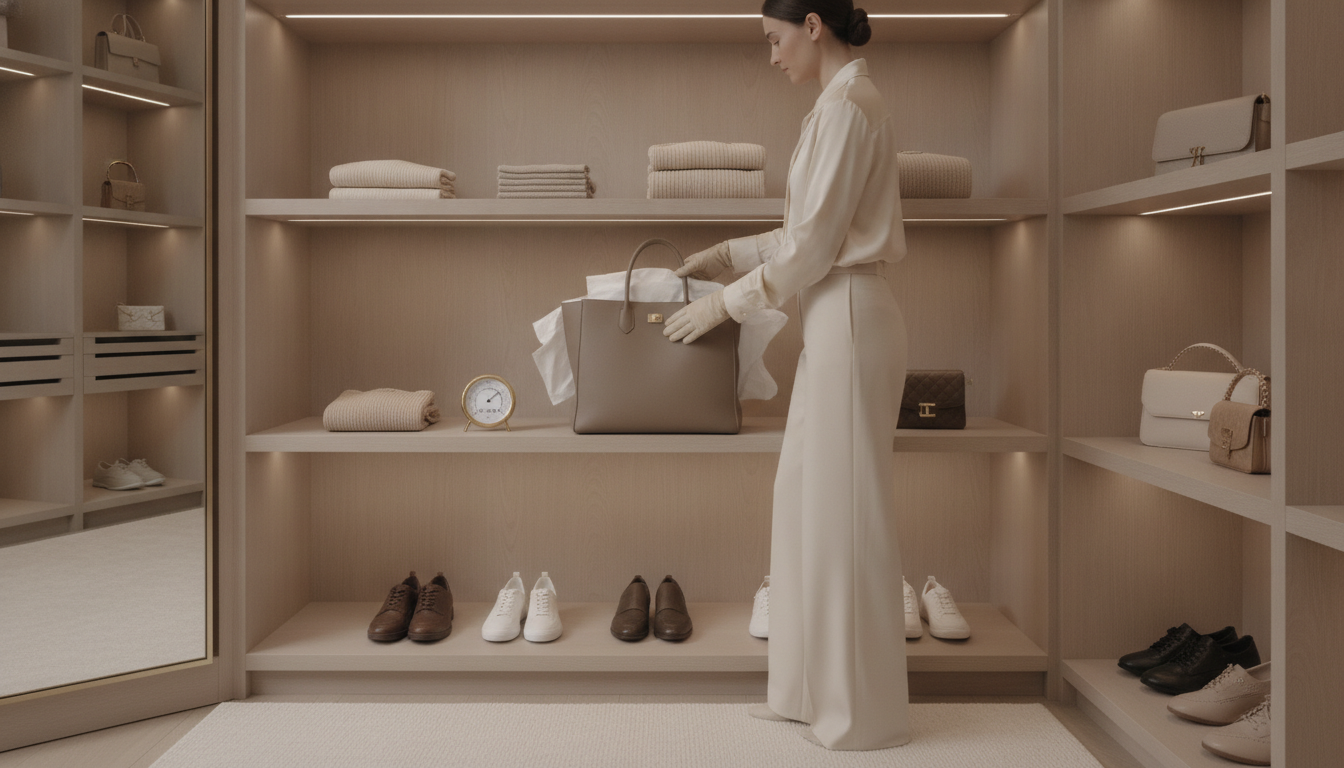
After cleaning and stuffing, it's time for actual storage. Over the years, I've settled into a fixed routine that I repeat for every new bag I bring home.
- Let the bag dry completely, at least 24 hours at room temperature
- Stuff it with acid-free tissue paper to help it hold its shape
- Place it in its original dust bag, never wrap it in plastic or cling film
- Store it upright or slightly reclined on a shelf, never stacked
- Take it out and air it briefly every 6 to 8 weeks
That last point is the one people forget most often. For bags you rarely carry, moisture can build up inside the dust bag over months, and without regular airing, it has no way to escape.
Using a dust bag the right way
The dust bag that comes with your handbag isn't just a marketing extra, it genuinely protects against dust and light scuffs from other bags in the closet. What matters is that the bag is made from breathable cotton rather than synthetic material.
If you've lost the original dust bag, a plain cotton pillowcase works just as well. The main thing is that the material lets the bag breathe and doesn't trap moisture.
Storing a bag without risking mold
Mold on leather almost always results from a combination of moisture and poor air circulation. Bags are especially at risk when they're put away in the closet while still damp from a rain shower.
I also keep small silica gel packets or unscented cedar wood blocks in the closet. Cedar wood helps regulate humidity while also keeping moths away, which can become a real problem for neglected leather.
If you've invested in a particularly valuable bag, like a Birkin or a rare Chanel edition, it's also worth learning more about how these pieces hold or grow in value. I cover this in more detail in my article on designer bag appreciation and which models are truly worth the investment.
Proper leather storage for different materials
Not all leather behaves the same way. Smooth leather from Louis Vuitton or Gucci tolerates the occasional treatment with colorless conditioning cream, while Saffiano leather, often used by Prada, needs less maintenance thanks to its textured surface.
Exotic leathers like crocodile or lizard, found in some limited-edition Hermès pieces, require specialized care products and should never be treated with regular leather lotion. When in doubt, it's worth taking these to a specialized leather care professional.
Special considerations for light colors
Light-colored bags in white, beige, or nude show color transfer from jeans or dark clothing especially fast. That's why I store them separately from darker bags and avoid any direct contact when arranging them on the shelf.
If you're not sure whether a secondhand bag you bought actually has genuine, properly treated leather, it's worth verifying authenticity before you start caring for it. I wrote a detailed checklist on exactly that: how to verify a designer bag is authentic with my detailed checklist.
Common mistakes I've made myself
For a long time, I stacked my bags on top of each other in a closed closet because space was tight. The result was pressure marks and misshapen handles that were nearly impossible to smooth back out.
Another mistake was storing bags in plastic shopping bags, thinking it would protect them from dust. In reality, the plastic trapped moisture inside the leather and led to light mildew spots.
These days, I prefer investing in a few sturdy wooden shelf dividers and plastic bag shapers, which I found online for very little money. The difference in how well my bags have held up over the years is noticeable.
Frequently asked questions about leather bag care
How often should I care for a leather bag?
With normal use, a thorough treatment with leather lotion every 3 to 4 months is enough. Cleaning and airing out the bag, on the other hand, should happen every 6 to 8 weeks, even if you barely carry it.
Can I store a leather bag in plastic?
No, plastic traps moisture and encourages mold growth. Use a breathable cotton dust bag instead, or a plain cotton pillowcase if needed.
How do I restore my handbag's shape?
Stuff the bag with acid-free tissue paper or dedicated bag shapers, never newspaper. Then let it rest undisturbed for a few days to settle back into shape.
Where in the closet should I store my designer bag?
Choose a spot away from exterior walls, out of direct sunlight, and away from radiators or heating vents. A middle shelf with good air circulation is ideal.
Does a dust bag really protect against mold?
A dust bag on its own won't prevent mold, it protects against dust and scratches. Preventing mold requires balanced humidity and regularly airing out the bag.
Final thoughts: caring for a leather bag starts in the closet
Proper storage isn't a luxury detail, it's the foundation for keeping your bag's value intact for years to come. If you take leather bag care seriously, pay attention to humidity, use the original dust bag, and steer clear of plastic and direct sunlight.
If you're thinking about getting a new designer bag and considering financing options, take a look at my comparison of designer bag installment plan providers. That way, you'll make a well-informed decision not just about care, but about the purchase itself.