Loan Term for Fashion Financing: My Honest Opinion

Reading time: 9 minutes
Last week I stood in the Louis Vuitton flagship store on Fifth Avenue in New York, finally holding my dream bag in my hands. $2,800. The sales associate offered me a payment plan: "6, 12, 24, or even 36 months – you decide." I didn't sign anything, because one question kept running through my head: how long should I really be paying for a bag? The answer has less to do with math than most people think – and that's exactly why I want to share my experience with fashion financing loan terms with you today.
Choosing the right term for fashion financing isn't a question of "What can I afford?" but of "What makes sense for me personally?". Paying off a Chanel Classic Flap over 36 months sounds tempting at first because the payment is low. But do you really want to be reminded of it every single month for three years? Over the past two years, I've financed four different designer pieces and tested different terms along the way. What I learned: there's no one-size-fits-all solution, but there are definitely clear principles.
Why the Fashion Financing Loan Term Matters More Than the Monthly Payment
When I financed my first Bottega Veneta Cassette in 2023, I chose 24 months. Calculating the monthly payment was simple: $1,850 divided by 24 came to about $77. Sounds doable, I thought. What I hadn't considered: after eight months, I was emotionally "done" with the bag. I barely wore it anymore, but I kept paying for another 16 months. It felt like a failed relationship you drag on out of a sense of duty.
Many people only start asking about the optimal loan term for fashion financing after they've already signed. That's why my most important advice is: don't think in payments, think in months of wear. How long will you realistically love and wear this piece? According to a 2024 study by the consulting firm McKinsey, German consumers actively use high-priced handbags for an average of 18 months before they end up in the closet (McKinsey State of Fashion 2024). That number should be your absolute upper limit.
Short or Long Financing Term: What I've Learned From Experience
I've tested both extremes. I paid off my Gucci Dionysus over 6 months and my Dior Saddle Bag over 18 months. The difference was dramatic:
- With 6 months, I felt every payment leaving my account. $283 a month hurt, but I was done quickly and the sense of accomplishment was real.
- With 18 months, I almost forgot about the payment. $94 hardly registered, but at some point I wondered: "Am I still paying this off?"
- With a mid-length term (12 months), I had the best balance: aware enough not to forget, short enough not to lose the joy.
The financing term should match your personal buying behavior. If you're like me and buy a new piece every few months, you need short terms. Otherwise your payments overlap and suddenly you're paying off three bags at once. With payment plans for designer fashion, there are exactly these kinds of psychological traps lurking that you don't have on your radar beforehand.
The True Cost: What a Longer Term Really Means
Most shops advertise 0% interest, but that's only half the truth. The longer your handbag loan term runs, the more hidden costs come your way. I'm not just talking about interest, but about opportunity costs.
Example: a Saint Laurent Kate Bag for $1,950. Over 12 months, you pay $162.50 a month. Over 36 months, only $54.17. The difference? Over those 36 months, you could invest or save the $108 you'd otherwise be paying. But let's be honest: very few people do. Instead, we spend the money elsewhere and in the end have simply paid for longer, with no real added value.
A second point: fashion cycles. What's hot today can be out in two years. The financing period for an expensive fashion item should never be longer than the trend cycle. Classics like a Chanel 2.55 or Hermès Birkin are exempt, but everything else? 12 to 18 months at most, otherwise you're paying for something you no longer want to wear.
My Rule of Thumb: The Three-Year Test

Before I choose a term, I ask myself a simple question: will I still love this piece in three years? If the answer comes hesitantly, even a 12-month financing plan is too long. This rule has saved me from impulsive decisions.
In August 2024, I wanted to finance a trendy Jacquemus Le Chiquito. Cute, Instagram-worthy, but honestly? I knew the hype would be over in a year. So I passed. Instead, I saved up for a timeless Loewe Puzzle Bag and paid for it in cash. Best decision ever. If you're unsure whether a piece is worth financing, sometimes saving together with your partner helps too – it forces you to reflect.
How Long Should I Take to Pay Off a Bag? The 20% Rule
A rule of thumb from traditional credit counseling says: your monthly loan payments should make up no more than 20% of your disposable income. With a net income of $2,500 and $500 in fixed costs, you're left with $2,000 – 20% of that is $400 for all installment payments combined.
If you use that $400 for a single bag, the term is short and the payment high. If you split it across several purchases, it gets complicated. Personally, I do better with a 10% rule per individual purchase: at most 10% of my disposable income for a single financed piece. That forces me to choose realistic terms and keeps me from overextending myself.
Choosing a Repayment Period: Practical Scenarios
Let me get specific. Here are three typical situations that I've experienced myself or observed among friends:
Scenario 1: You earn well and want a Chanel Classic Flap for $8,500. You could choose 12 months ($708/month) or 24 months ($354/month). My advice: 12 months. With an investment like that, you want to be debt-free quickly and truly own the piece. The higher payment is a healthy reality check.
Scenario 2: You're just starting your career and want a Mulberry Alexa for $1,200. 6 months ($200/month) is doable, but tight. 12 months ($100/month) gives you breathing room. Here I'd choose 9 months ($133/month) – a compromise that's neither too burdensome nor too drawn out.
Scenario 3: You want a trend bag for $800. Here the rule is: 6 months at most. Anything else is too risky because the trend is over faster than the financing. If $133 a month is too much for you, the piece is simply too expensive for you.
What Shops Won't Tell You About the Fashion Financing Period
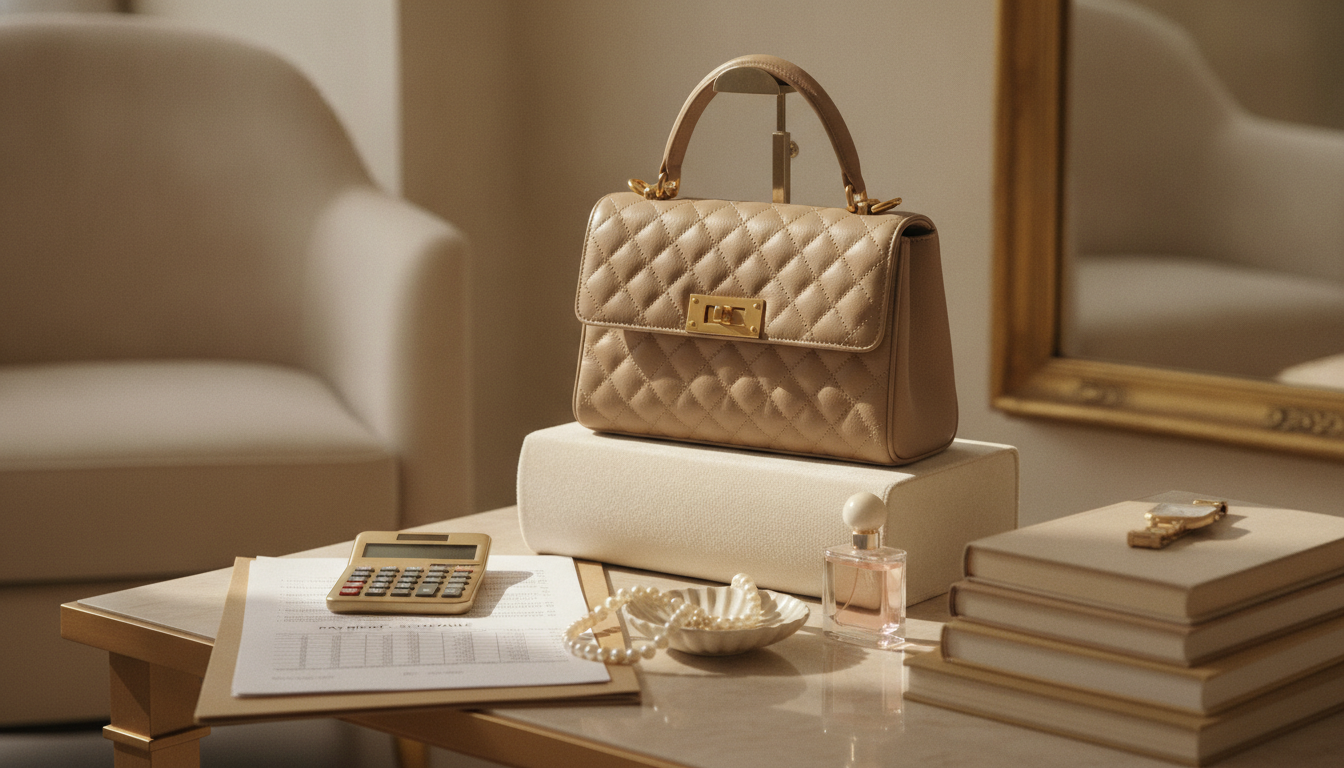
The sales associates in the flagship store have one goal: they want you to buy. That's why they often push longer terms. "Just $50 a month" sounds more attractive than "$708 a month". But no one explains to you that longer terms limit your financial flexibility.
An example: you finance a bag over 36 months. After a year, you lose your job or want to cut back at work. Suddenly the $50 a month is a burden. With a 12-month financing plan, you'd have been done long ago. That's the difference between "cheap per month" and "sensible overall".
Also: shops earn money from long terms, even at 0% interest. How? They get a commission from the financing partner. The longer you pay, the more both of them earn. That's not bad per se, but you should know about it. You can learn more about such mechanisms in my article on hidden costs of installment purchases.
My Personal System: The 1/3 Rule
After four financed bags, I developed my own system: the financing period should never be longer than one third of the expected useful life. If I plan to actively carry a bag for three years, I finance it for 12 months at most. That way, I'm debt-free for two thirds of the time I use it and can enjoy the piece without a monthly reminder of the cost.
This rule has helped me avoid impulsive long-term financing. It forces me to think realistically about my buying decisions. And it has another advantage: if I want to sell the bag after two years, I've long since paid it off and can reinvest the proceeds in full.
FAQ: Your Burning Questions About Fashion Financing Loan Terms
What is the longest I should finance a designer bag?
18 months at most, ideally 12 months. Anything beyond that risks you no longer actively using the bag while you're still paying for it. For classics like Chanel or Hermès, you can go to 24 months if you must, but only if you're sure you'll love the piece in the long run.
Which is better: a short term with a high payment or a long term with a low payment?
A short term with a high payment is financially healthier. You become debt-free sooner, keep your financial flexibility, and the high payment reminds you to consume consciously. Long terms tempt you into more purchases because the individual payment looks low, but the total burden rises.
Can I shorten the term later?
Yes, with most financing agreements you can make extra payments or pay off the loan early. Check beforehand whether prepayment penalties apply. In Germany, these are capped at 1% of the remaining balance for consumer loans (§ 502 BGB). I paid off my Dior financing after 10 of 18 months and paid a $40 fee – still worth it.
Which term do you recommend for a bag under $1,000?
6 months at most. With a lower purchase price, longer financing is disproportionate. If you finance $800 over 12 months, you only pay $67 a month – sounds like little, but you could save the money in 6 months and skip financing entirely.
How do I find the optimal term for my budget?
Work backwards: take 10% of your disposable monthly income as the maximum payment for a single piece. Divide the purchase price by that amount. The result is your minimum term. Then ask yourself: would I still want this bag if I only finished paying it off after that time? If not, reduce the purchase price or save for longer.
My Conclusion: Less Is More, Even With the Loan Term
The fashion financing loan term isn't a technical question, but an emotional one. It's about how long you're willing to live with a purchase decision – financially and mentally. My experience shows: the shorter the term, the better the feeling afterward. You buy more consciously, enjoy more intensely, and stay financially flexible.
If you're unsure, always choose the shorter option. Better twelve months with a payment you feel than 36 months with a payment you forget about – but never get rid of. And if the payment is too high? Then the piece is too expensive. It's that simple. Fashion should bring joy, not be a burden. Even in installments.